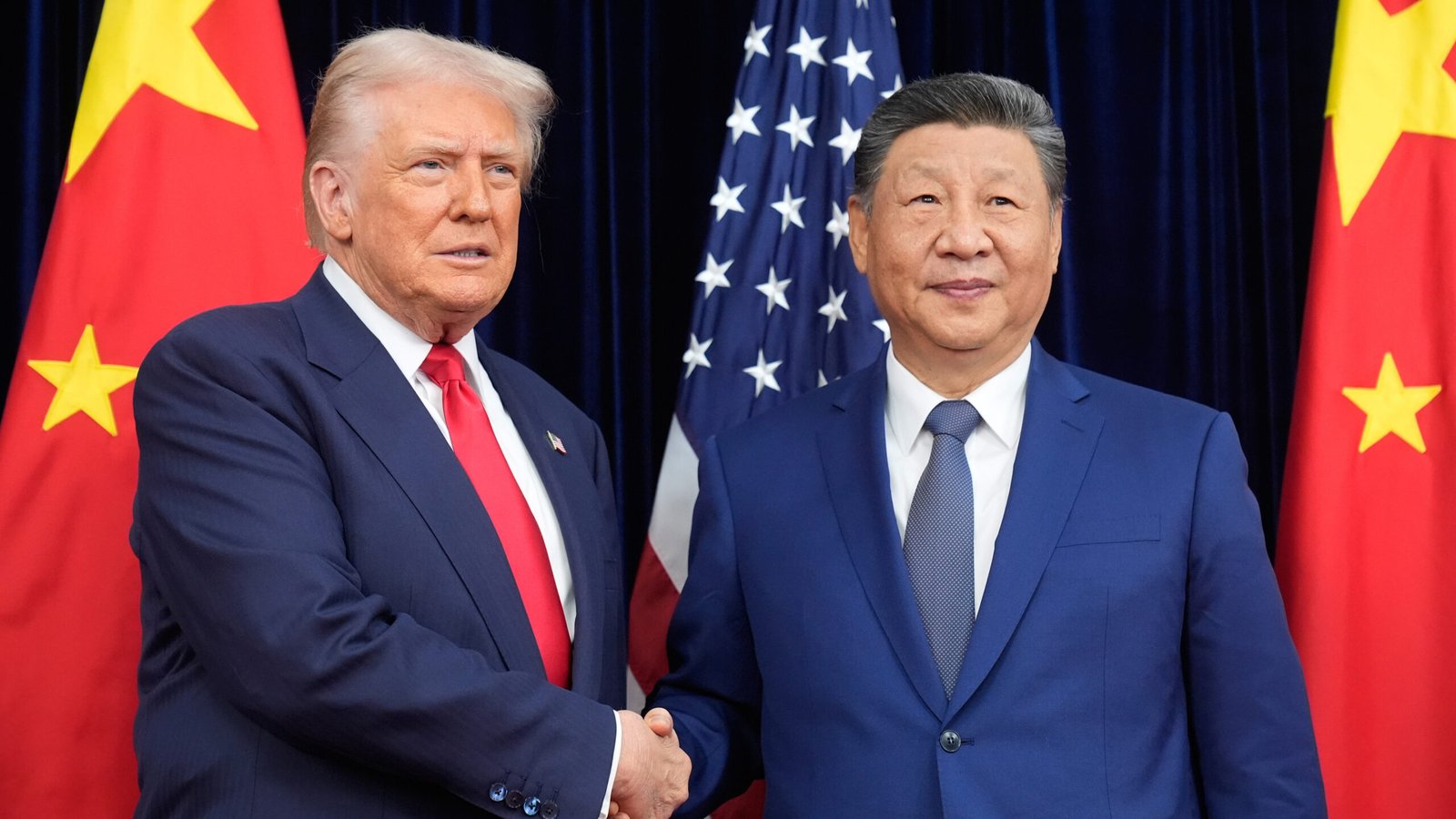
A Fragile Pause in a High-Stakes Rivalry
The late-October 2025 trade truce between Washington and Beijing brought the first meaningful de-escalation in years of tariff and export-control confrontation. Among its key provisions: China agreed to suspend rare-earth export controls for one year, while the U.S. paused expansion of its export-control “Entity List.”
It is a welcome breather in a relationship that has defined the global industrial landscape. Rare earths — the metals behind EV motors, wind-turbine magnets, smartphones, and defense electronics — sit at the heart of this détente. Yet the truce changes sentiment more than structure. China still processes more than 70 percent of global rare-earth feedstock and dominates magnet-metal production.
As one EU official put it, “We’ve been given time, not independence.”

Supply Chains Catch Their Breath
Market response was swift. Prices of neodymium-praseodymium oxide eased by double digits within weeks, and manufacturers cautiously resumed procurement. Freight forwarders, insurers, and port authorities began quoting smoother rates on China-linked cargo.
For automakers, turbine producers, and semiconductor manufacturers, this reduced short-term cost uncertainty is a relief. Yet the optimism remains measured. Most traders are hedging six- to nine-month exposure, aligned with the truce’s one-year window. No one assumes geopolitics has stabilized.
Why It Matters to Capital Providers
For investors in trade finance, receivables funding, or structured credit, this truce brings a temporary risk-pricing advantage. Reduced tariff friction and clearer shipping lanes improve the visibility of cash flows in commodity finance.
Structured facilities tied to critical-mineral cargo — from magnet metals to high-purity copper and battery precursors — can now operate with more predictable margins. Insurers and banking partners are willing to quote again; transaction spreads narrow.
But discipline is key. Deals should remain short-cycle (90–180 days) with policy-event triggers that automatically reprice or recall financing in the event of export bans or the reemergence of tariffs. Collateral values must be re-assessed against transparent benchmarks such as the LME or Asian Metal Index. This is a yield window, not a regime change.
A Policy-Engineered Reprieve, Not a Reset
Rare-earth and energy-material supply chains remain a rare overlap of industrial and security policy. Western capacity — from Texas to Western Australia and the GCC — is expanding but still nascent. China’s integrated refining and alloy ecosystem remains unmatched.
That’s why this truce should be viewed as a policy-engineered reprieve. It’s a breathing space for governments and investors to accelerate alternative capacity, secure offtake agreements, and finance midstream infrastructure that reduces single-source dependence.
Motjuan’s Bridging Role from the UAE
Sitting between East and West, the United Arab Emirates has quietly become the world’s neutral logistics and finance hub — a position uniquely suited to translating this temporary calm into opportunity.
Motjuan Resources & Commodities is headquartered in the UAE’s free-zone ecosystem and uses its neutrality to facilitate trade in critical minerals and energy materials between the U.S. and China. As a facilitator, advisor and structured-finance arranger, Motjuan connects Western demand with Eastern supply and Gulf capital, operating within transparent, compliant frameworks that align with UAE AML/CFT standards.
The firm’s dual vantage point — access to Asian producers and Western investors — allows it to structure bilateral and multilateral trade opportunities that de-risk exposure while keeping supply chains moving. Through its partner network, Motjuan supports secured trade facilities, asset-backed loans, and forward-purchase contracts built with policy-event protections and dynamic pricing triggers.
In short, Motjuan operates where the truce becomes tangible — turning diplomacy into deal flow.
What Stakeholders Should Do Next
For operators: use this pause to finalize JVs, diversify suppliers, and lock in logistics at today’s favorable rates.
For investors: embed geopolitical clauses in all credit documentation, run snap-back stress tests, and maintain rolling maturities.
For governments: blend export-credit support with private capital to accelerate refining and recycling outside China.
Motjuan’s advisory desk continues to develop cross-border trade structures that align with this strategy: short-term, asset-secured and compliant.
Looking Ahead
If the truce holds, 2026 could bring normalized pricing and a partial restoration of supply-chain trust. If it falters, tariff and licensing shocks will return by mid-year. Either scenario rewards the same posture: agility. Investors who design flexibility into their capital will outperform.
The message is clear: the 2025 truce offers clarity with an expiry date. It’s not peace, but preparation time — a chance for those positioned between both blocs to create the financing corridors that tomorrow’s mineral economy will depend on.